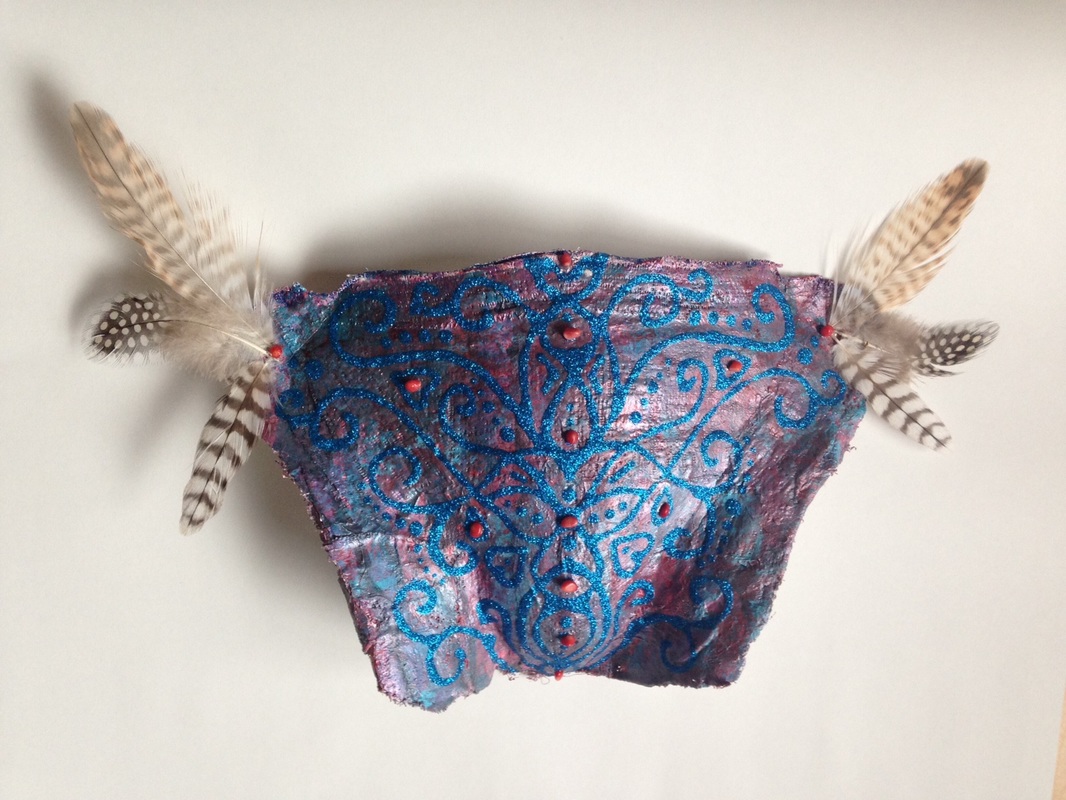
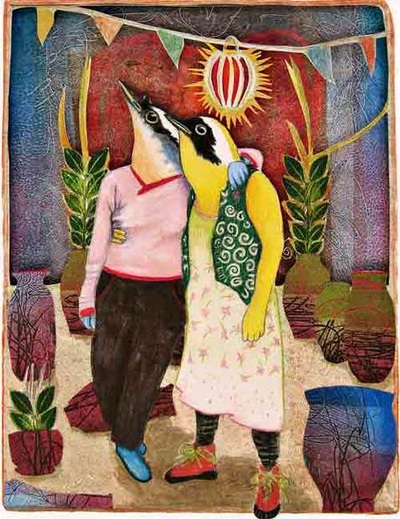
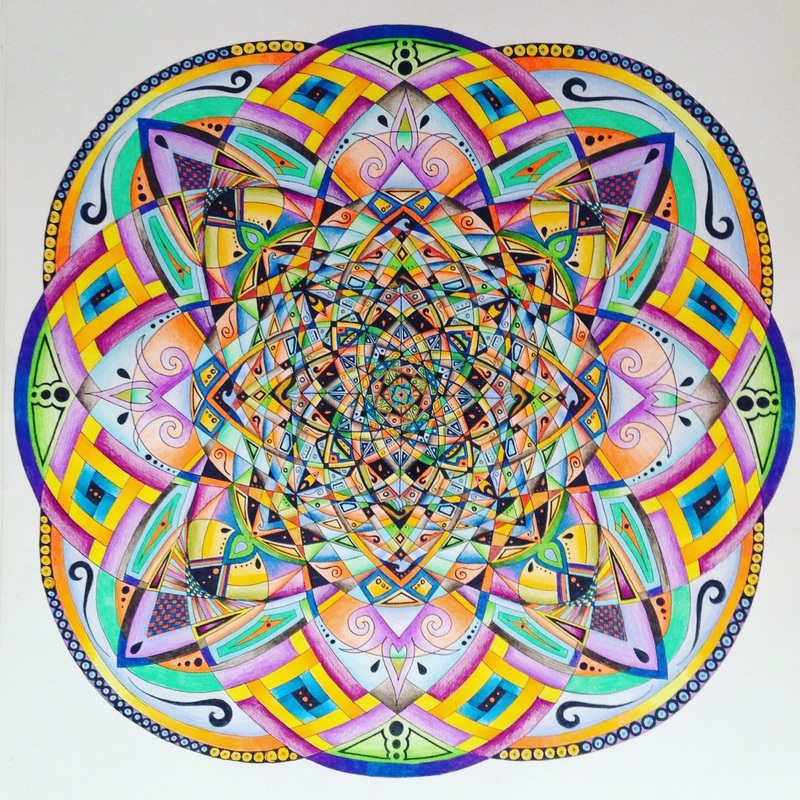
Photographs by Adela C. Licona, from left: "Beneath the Skin," "Stepelia Gigantea 1," and "Sweetwater Textures"
About Us
TRIVIA, deriving from "tri-via" (crossroads), was one of the names of the Triple Goddess. Recognizing that what is of primary importance in and about women's lives tends to be relegated to the margins of patriarchal history and thought, dismissed as "trivial," we conceive TRIVIA: Voices of Feminism as a place at the crossroads where women's ideas, words, and images can assume their original power and significance. We operate with (and within) an expansive definition of feminism, one that recognizes diversity of thought and practice across boundaries and borders of all kinds.
SPRING: The Seasons of TRIVIA
“What occupied your life is now gone.”
I hear myself say this to a friend, as she is talking about the sense of space she feels as she leaves old habits and things behind – yet now worries how she will handle losing her aging pet dog. How can she prepare for this impending loss? So she starts planning, and talking about where she will bury him, as he plays in front of her.
I see we are still preoccupied with death, the theme of our last issue. And we are also preoccupied with being preoccupied – with shifts and changes, with navigating new open spaces.
And here we are in Spring, with a new Issue edited by Jo Novelli and Patricia Friedrich and the windows of TRIVIA wide open: a new format, the colors of nature, and Adela C. Licona’s lovely photographs. In preparing for this launch, we have been preoccupied with Change and Space – the organizational aspects: Adela and Julia Balén are new to the Collective; Linda Van Leuven (LVL) a new co-editor; and Monica has taken the reins as publisher -- or rather, we have named (so feminist!) what she’s already been doing for the past 18 months.
We have also been preoccupied, as we always are, with issues of substance: the practicalities of creating and holding space for an evolving vision of Feminism, and of TRIVIA. This topic seems to monopolize our behind-the-scenes conversations. How are we literary? How are we feminist? How are we both? How do we honor the past, the archive, but also move forward? Who are we now? And how do we (can we?) write this opening Editors’ note in the three voices of Monica, Julie, and LVL?
(pre)Occupation is a fitting theme, not only because there is new leadership of TRIVIA, new online presence and delivery, but it feels like a New Age -- with new urgency around old issues. And it seems everyone is talking about Feminism -- asking, questioning, wondering, demanding – and this is good news; perhaps this renewed interest is a response to increased legislative threats to Women’s Reproductive Rights, the unspeakable violence against women – the shootings, killings, rapes, gang rapes, community cover-ups, judicial pardons, and media insensitivity – which now is easily shared and made public. Maybe it is our increased Humanity that renders such contrast more visible, and intolerable. Somehow the thread of Women’s unequal treatment is now a soundbite that people are suddenly hearing – the way a crime wave isn’t actually an increase in the actual numbers of crimes, but just a shift in our perception, the focus of attention and tellable “news.” Whatever the cause of this new wave of awareness, people want answers and are looking to women, and to Feminism, to lead the discussion.
So what do we talk about? In our last issue, LVL wrote about the relative invisibility of death within feminism, as a feminist topic. Surprisingly, violence against women is also somewhat absent among feminists except as a topic/campaign in a few circles. Yet, Monica suggests, “many women are talking about other things, like power and privilege and how to get ahead, and the mommy wars and issues of economic sustenance, and how great it is that the military has equalized.”
We often talk about what we know, what strikes us personally in our lives, or matters to those closest to us. We can’t fault people for not talking about what matters to “us,” what issues about Women we see as basic and vital, though we often do. And people frame the issues, their understanding of feminism, and new theories and solutions, from their experience and position. Recently, Facebook COO Sheryl Sandberg invited women to “lean in” in order to understand our place (read: absence) in the corporate hierarchy/food chain – where she lives and excels.
We appreciate such messages of movement, and that this has created a huge avenue to talk about women, work, feminism, sexism, and strategy. And we want to add that movement is dimensional: that as we lean in, we also want to push out, to expand the conversation and our literary feminist tentacles into new spaces. We want to open up. Maybe we just want to veer left, put the blinker on, and turn. Whatever the substance of our interests, the focus of our conversation, or Course of our life’s direction -- it is taking up the old charge of Changing the World for Women, and this affects everyone.
***
So how does TRIVIA emerge -- in Spring, and after Death? How do we appear -- collectively and individually? How and why does this matter in a Feminist Literary Journal (or in Feminism, in general)?
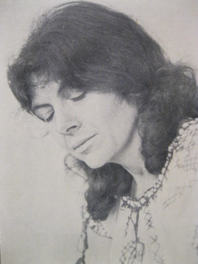
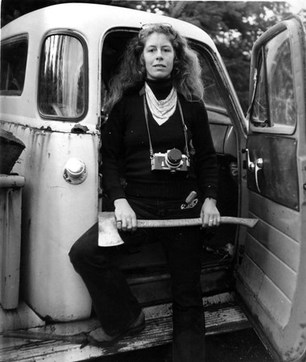
Part of the new organizational changes include pictures on our Editors page -- some “serious,” some “fun,” some “glamorous.” You wouldn’t think that choosing a new picture would be an act of feminist consciousness-raising. And yet, it was – because it started conversations and reflections: What is the (pre)Occupation with appearance for women, for our Work and our Feminism? What do labels such as “serious” or “pretty” mean, and what is it, exactly, that we are responding to when we use them?
LVL states: I was deciding between two pictures, one that all my feminist academic friends liked, and one that my non-academic pals preferred. It all came down to posture: a straight ahead shot or head tilt, and related ideas about professionalism. One feminist colleague wrote: “the tilted head could also be read as not wanting to take up very much space…So not sure about this as a main professional shot?” My other pals thought the head tilt was more “natural” and that I looked approachable and less distant – I was someone they wanted to talk to. (I chose the one I liked, that felt best.)
Similarly, Monica had a conversation with her young daughters while walking to the bus stop one day:
Monica: “Should I wear a pretty dress to the Planned Parenthood luncheon, or something professional like slacks and a jacket?”
Delaney, nine years old, responded: “Professional.”
Monica asked, “Why?”
Laney said, “Because if you just look pretty, they won’t think you’re working.”
And Monica, a Feminist Parent, wonders where her daughter gets this message, that somehow beauty and work, pretty and serious, are incompatible. And then rereads their exchange, and sees that it was she who offered up “pretty/professional” as a dichotomy for her daughter to choose between, and seemingly through gendered outfits. This awareness stunned her, and so (prompted by LVL) she chose a “pretty” picture for her TRIVIA bio.
LVL was simultaneously horrified and fascinated by the discussions of appearance and professionalism about her photo, and how much room it (and other people’s ideas about it) took up in her life – Oh, that’s still here?
She wrote, “Just because we aren’t consciously aware of something, doesn’t mean we aren’t preoccupied with it; that we aren’t always responding to it in some way. Sometimes the things we are preoccupied with are things we don’t easily recognize. We don’t feel particularly nervous or twitchy – yet somehow a habitual preoccupation has organized our lives.”
And this might seem frivolous, this discussion of appearance – our own (which pictures to run? what outfit to wear?) or TRIVIA’s (which template and font and colors?) -- when contrasted with preoccupations of basic necessities such as food, water, clothing, safety, and shelter. Yet it all matters in terms of awareness, and discussions of feminism: what we notice, what holds our attention, focuses our energy, and how we (want to) show up in Life.
So we talk behind the scenes, about the relationship between appearance and feminism -- beauty, power, work, femininity, masculinity, professionalism – the appearance of being good and competent -- and the unbearable importance of gendered perceptions and structures in shaping our own embodied realities. Including what directions our lives take, what we do or don’t “lean in” to, how comfortable we are in new and open spaces -- in letting go of old organizing habits or ways of relating.
As we take time to reorganize, reshape, and reframe -- a kind of spring cleaning, we continue moving forward as a feminist literary journal into open space: as a designated place for women’s voices, a performance of the now, in touch with archives of our past, transformed and transforming.
And we ask you, too, with great tenderness and awareness, to consider your own preoccupations: What organizes your life? How do you look? And what do you see?
Welcome to pre(Occupation). – Linda Van Leuven, Co-Editor
I hear myself say this to a friend, as she is talking about the sense of space she feels as she leaves old habits and things behind – yet now worries how she will handle losing her aging pet dog. How can she prepare for this impending loss? So she starts planning, and talking about where she will bury him, as he plays in front of her.
I see we are still preoccupied with death, the theme of our last issue. And we are also preoccupied with being preoccupied – with shifts and changes, with navigating new open spaces.
And here we are in Spring, with a new Issue edited by Jo Novelli and Patricia Friedrich and the windows of TRIVIA wide open: a new format, the colors of nature, and Adela C. Licona’s lovely photographs. In preparing for this launch, we have been preoccupied with Change and Space – the organizational aspects: Adela and Julia Balén are new to the Collective; Linda Van Leuven (LVL) a new co-editor; and Monica has taken the reins as publisher -- or rather, we have named (so feminist!) what she’s already been doing for the past 18 months.
We have also been preoccupied, as we always are, with issues of substance: the practicalities of creating and holding space for an evolving vision of Feminism, and of TRIVIA. This topic seems to monopolize our behind-the-scenes conversations. How are we literary? How are we feminist? How are we both? How do we honor the past, the archive, but also move forward? Who are we now? And how do we (can we?) write this opening Editors’ note in the three voices of Monica, Julie, and LVL?
(pre)Occupation is a fitting theme, not only because there is new leadership of TRIVIA, new online presence and delivery, but it feels like a New Age -- with new urgency around old issues. And it seems everyone is talking about Feminism -- asking, questioning, wondering, demanding – and this is good news; perhaps this renewed interest is a response to increased legislative threats to Women’s Reproductive Rights, the unspeakable violence against women – the shootings, killings, rapes, gang rapes, community cover-ups, judicial pardons, and media insensitivity – which now is easily shared and made public. Maybe it is our increased Humanity that renders such contrast more visible, and intolerable. Somehow the thread of Women’s unequal treatment is now a soundbite that people are suddenly hearing – the way a crime wave isn’t actually an increase in the actual numbers of crimes, but just a shift in our perception, the focus of attention and tellable “news.” Whatever the cause of this new wave of awareness, people want answers and are looking to women, and to Feminism, to lead the discussion.
So what do we talk about? In our last issue, LVL wrote about the relative invisibility of death within feminism, as a feminist topic. Surprisingly, violence against women is also somewhat absent among feminists except as a topic/campaign in a few circles. Yet, Monica suggests, “many women are talking about other things, like power and privilege and how to get ahead, and the mommy wars and issues of economic sustenance, and how great it is that the military has equalized.”
We often talk about what we know, what strikes us personally in our lives, or matters to those closest to us. We can’t fault people for not talking about what matters to “us,” what issues about Women we see as basic and vital, though we often do. And people frame the issues, their understanding of feminism, and new theories and solutions, from their experience and position. Recently, Facebook COO Sheryl Sandberg invited women to “lean in” in order to understand our place (read: absence) in the corporate hierarchy/food chain – where she lives and excels.
We appreciate such messages of movement, and that this has created a huge avenue to talk about women, work, feminism, sexism, and strategy. And we want to add that movement is dimensional: that as we lean in, we also want to push out, to expand the conversation and our literary feminist tentacles into new spaces. We want to open up. Maybe we just want to veer left, put the blinker on, and turn. Whatever the substance of our interests, the focus of our conversation, or Course of our life’s direction -- it is taking up the old charge of Changing the World for Women, and this affects everyone.
***
So how does TRIVIA emerge -- in Spring, and after Death? How do we appear -- collectively and individually? How and why does this matter in a Feminist Literary Journal (or in Feminism, in general)?
Part of the new organizational changes include pictures on our Editors page -- some “serious,” some “fun,” some “glamorous.” You wouldn’t think that choosing a new picture would be an act of feminist consciousness-raising. And yet, it was – because it started conversations and reflections: What is the (pre)Occupation with appearance for women, for our Work and our Feminism? What do labels such as “serious” or “pretty” mean, and what is it, exactly, that we are responding to when we use them?
LVL states: I was deciding between two pictures, one that all my feminist academic friends liked, and one that my non-academic pals preferred. It all came down to posture: a straight ahead shot or head tilt, and related ideas about professionalism. One feminist colleague wrote: “the tilted head could also be read as not wanting to take up very much space…So not sure about this as a main professional shot?” My other pals thought the head tilt was more “natural” and that I looked approachable and less distant – I was someone they wanted to talk to. (I chose the one I liked, that felt best.)
Similarly, Monica had a conversation with her young daughters while walking to the bus stop one day:
Monica: “Should I wear a pretty dress to the Planned Parenthood luncheon, or something professional like slacks and a jacket?”
Delaney, nine years old, responded: “Professional.”
Monica asked, “Why?”
Laney said, “Because if you just look pretty, they won’t think you’re working.”
And Monica, a Feminist Parent, wonders where her daughter gets this message, that somehow beauty and work, pretty and serious, are incompatible. And then rereads their exchange, and sees that it was she who offered up “pretty/professional” as a dichotomy for her daughter to choose between, and seemingly through gendered outfits. This awareness stunned her, and so (prompted by LVL) she chose a “pretty” picture for her TRIVIA bio.
LVL was simultaneously horrified and fascinated by the discussions of appearance and professionalism about her photo, and how much room it (and other people’s ideas about it) took up in her life – Oh, that’s still here?
She wrote, “Just because we aren’t consciously aware of something, doesn’t mean we aren’t preoccupied with it; that we aren’t always responding to it in some way. Sometimes the things we are preoccupied with are things we don’t easily recognize. We don’t feel particularly nervous or twitchy – yet somehow a habitual preoccupation has organized our lives.”
And this might seem frivolous, this discussion of appearance – our own (which pictures to run? what outfit to wear?) or TRIVIA’s (which template and font and colors?) -- when contrasted with preoccupations of basic necessities such as food, water, clothing, safety, and shelter. Yet it all matters in terms of awareness, and discussions of feminism: what we notice, what holds our attention, focuses our energy, and how we (want to) show up in Life.
So we talk behind the scenes, about the relationship between appearance and feminism -- beauty, power, work, femininity, masculinity, professionalism – the appearance of being good and competent -- and the unbearable importance of gendered perceptions and structures in shaping our own embodied realities. Including what directions our lives take, what we do or don’t “lean in” to, how comfortable we are in new and open spaces -- in letting go of old organizing habits or ways of relating.
As we take time to reorganize, reshape, and reframe -- a kind of spring cleaning, we continue moving forward as a feminist literary journal into open space: as a designated place for women’s voices, a performance of the now, in touch with archives of our past, transformed and transforming.
And we ask you, too, with great tenderness and awareness, to consider your own preoccupations: What organizes your life? How do you look? And what do you see?
Welcome to pre(Occupation). – Linda Van Leuven, Co-Editor
Adela C. Licona's Photographs
You may notice that we have a brand new look, including a fresh design and new photographic images from Collective Member Adela C. Licona. Images of great beauty that express a profound connection to forms of living, and to what/who TRIVIA aspires to be in the world. From the artist's statement:
"Adela C. Licona's landscape photography captures surface and implies depth and connection. Her photographs interrogate the coming together and coming apart at the fold, the interstices -- the inside/outside -- of vivid con/textu/r/al forms. With camera in hand, she focuses on details. Licona's use of extreme close-ups produces distortions to imagine new ways of making meaning. As artist, academic, and public rhetor, she is interested in provoking and participating in new ways of looking and seeing that invite radical reimagings of being, belonging, and relating to one another and to the earth."